The Best Fluffy Pancakes recipe you will fall in love with. Full of tips and tricks to help you make the best pancakes.

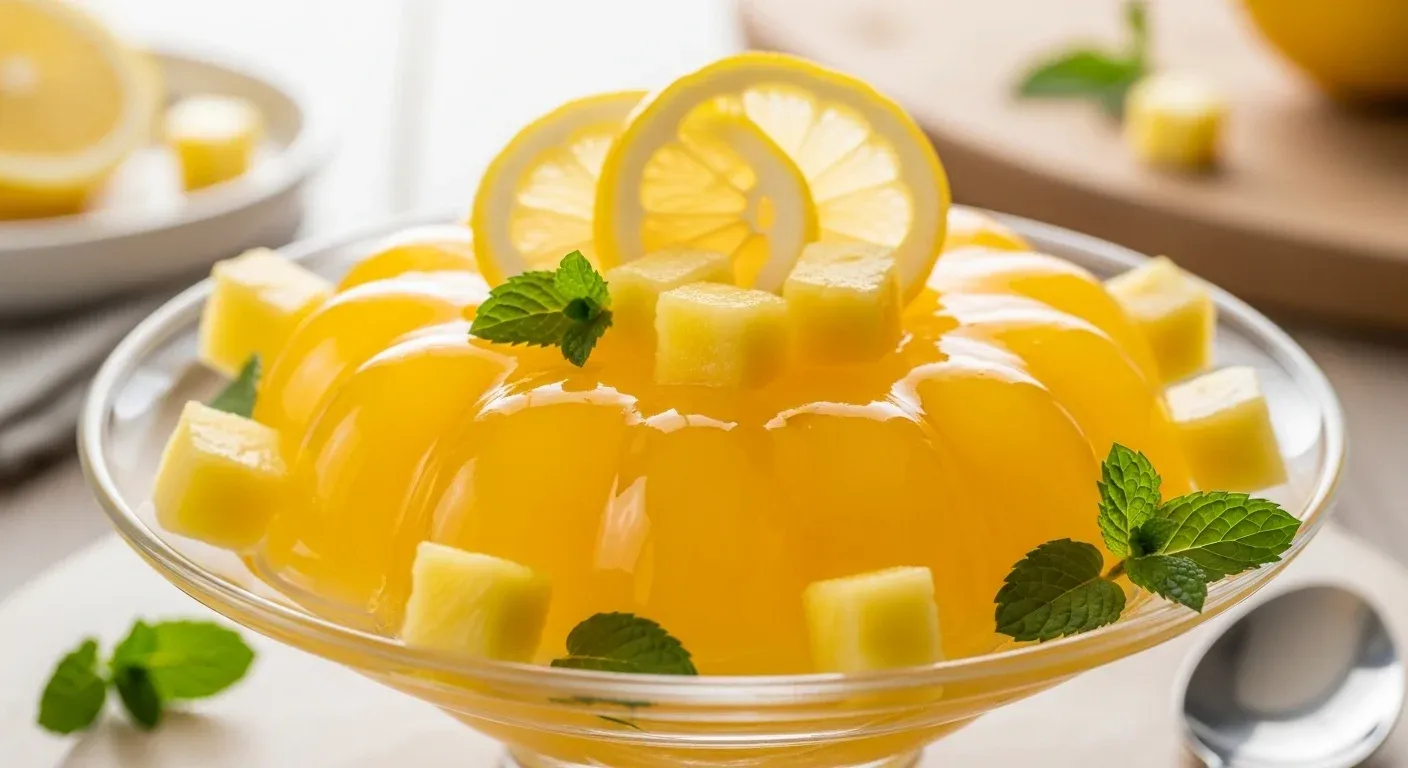
Refreshing and vibrant, this Lemon-Pineapple Gelatin Dessert brings a burst of sunshine to your table. The zesty citrus notes perfectly complement the sweet tropical pineapple chunks. This plant-based version uses agar-agar for a clean, sustainable finish. You will love its smooth texture and naturally bright yellow hue.
Table of Contents
Why You’ll Love This Lemon-Pineapple Gelatin Dessert
- Explosive tropical and citrus flavor profile.
- Quick preparation with minimal cooking time.
- Healthy, plant-based, and fiber-rich ingredients.
- Perfect for meal prep and eco-friendly gatherings.
Ingredients You’ll Need
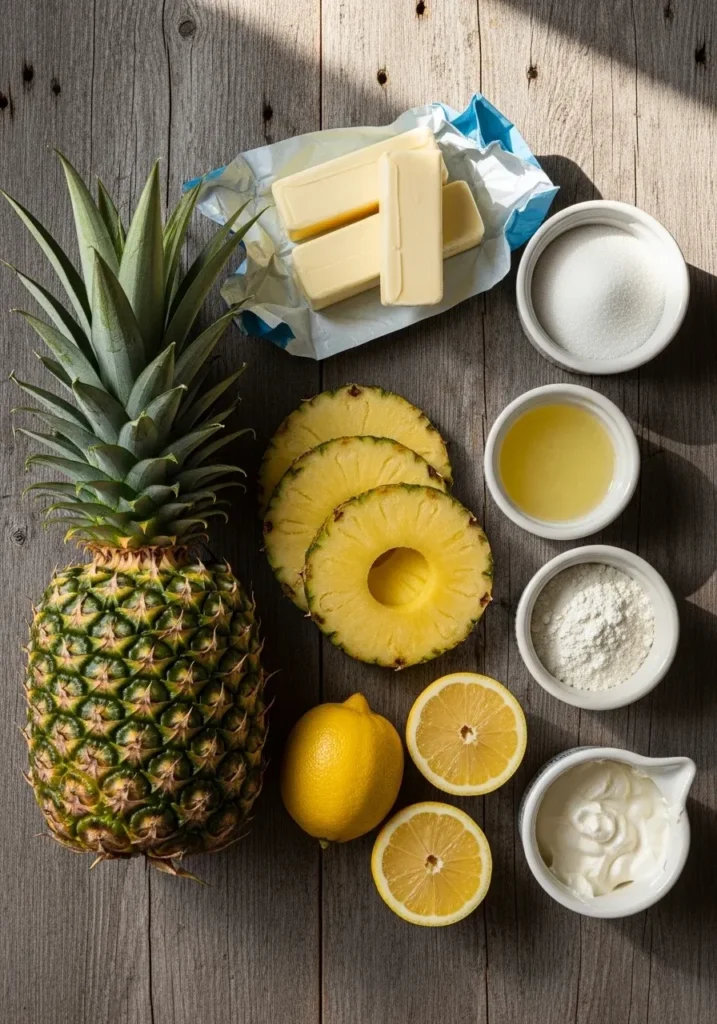
To create a truly spectacular Lemon-Pineapple Gelatin Dessert, you must prioritize the quality of your produce. As someone who values eco-responsible cooking, I recommend sourcing organic lemons to ensure your zest is free from pesticides. Furthermore, using fresh pineapple provides a superior enzyme profile, though you must cook it slightly to ensure the gelatin sets properly.
Alternatively, canned pineapple in its own juice works wonderfully for a zero-waste approach where you utilize the liquid as part of the base. Below is the precise list of components you will need to assemble this colorful masterpiece.
| Ingredient | Quantity | Purpose |
|---|---|---|
| Fresh or Canned Pineapple | 2 cups, diced | Provides texture and sweetness |
| Fresh Lemon Juice | 1/2 cup | Adds necessary acidity and brightness |
| Organic Lemon Zest | 1 tablespoon | Infuses intense citrus aroma |
| Agar-Agar Powder | 2 teaspoons | The plant-based gelling agent |
| Maple Syrup or Agave | 1/4 cup | Natural sweetener to balance tartness |
| Filtered Water | 2 cups | The liquid base for the jelly |
| Turmeric Powder | 1 pinch | Enhances the natural yellow color |
Choosing high-quality ingredients ensures that your Lemon-Pineapple Gelatin Dessert tastes as vibrant as it looks. Moreover, selecting seasonal fruits reduces your carbon footprint, which is a core value in my kitchen. If you use canned pineapple, remember to recycle the tin and save any extra juice for smoothies or dressings. This mindful approach transforms a simple sweet treat into a sustainable culinary statement.
Substitutions & Variations
Note: This video is for demonstration purposes and may use a slightly different method.
You can easily adapt this Lemon-Pineapple Gelatin Dessert to suit your pantry or dietary needs. If you prefer a creamier texture, replace one cup of water with full-fat coconut milk for a tropical “pina colada” vibe. Furthermore, you might swap the lemon for lime if you desire a sharper, more mojito-like flavor profile.
For those who do not follow a vegan diet, you may substitute agar-agar with grass-fed gelatin, though the setting method will differ. Always remember that agar-agar requires boiling to activate, whereas traditional gelatin should never reach a boil. Additionally, you can experiment with different natural sweeteners like coconut sugar, though it may darken the final color of your dessert.
You can easily adapt this Lemon-Pineapple Gelatin Dessert to suit your pantry or dietary needs. For more ideas on flavor variations, check out our recipe for Lemon-Pineapple Gelatin.
Equipment You’ll Need
Having the right tools in your kitchen makes the process of crafting this Lemon-Pineapple Gelatin Dessert seamless and enjoyable. I always suggest using a heavy-bottomed saucepan to ensure even heat distribution while you dissolve the agar-agar. A fine microplane or grater is essential for obtaining that fragrant lemon zest without the bitter white pith.
Furthermore, you will need a silicone whisk to prevent any lumps from forming in your mixture. For the final presentation, choose a decorative glass mold or individual ramekins. Using glass or ceramic is a more eco-friendly choice compared to plastic containers, and it helps the dessert chill more evenly. Finally, a sharp knife and a sturdy cutting board are necessary for prepping your fresh pineapple chunks.
Step-by-Step Instructions

Follow these detailed steps to ensure your Lemon-Pineapple Gelatin Dessert reaches the perfect consistency and flavor balance every time.
- Prepare the Fruit: Start by dicing your pineapple into small, uniform bite-sized pieces. If you are using fresh pineapple, simmer the chunks in a small amount of water for five minutes. This step is crucial because fresh pineapple contains bromelain, an enzyme that can prevent gelling agents from setting. Subsequently, drain the fruit and set it aside.
- Zest and Juice: Thoroughly wash your organic lemons. Carefully zest them until you have a full tablespoon of bright yellow peel. Afterward, squeeze the lemons to extract half a cup of fresh juice, ensuring you remove any stray seeds.
- Mix the Base: In your heavy-bottomed saucepan, combine the filtered water, agar-agar powder, and a pinch of turmeric. Whisk the mixture vigorously while it is still cold to prevent clumping. Then, turn the heat to medium-high.
- Activate the Agar: Bring the liquid to a rolling boil. Continue to whisk constantly for about two to three minutes. This step ensures the agar-agar fully dissolves and activates, which is the secret to a firm Lemon-Pineapple Gelatin Dessert.
- Sweeten and Flavor: Reduce the heat to low. Stir in the maple syrup, lemon juice, and lemon zest. Taste the mixture carefully—add a bit more sweetener if your lemons were particularly tart. Transitioning from high heat to low heat allows the flavors to meld without boiling away the delicate citrus notes.
- Assemble: Arrange the prepared pineapple chunks at the bottom of your chosen mold or ramekins. Slowly pour the hot liquid over the fruit. Consequently, the pineapple pieces might float to the top, creating a beautiful layered effect once inverted.
- Chill and Set: Allow the mold to sit at room temperature for about twenty minutes. Once the steam subsides, transfer it to the refrigerator. Let the dessert set for at least three to four hours, or ideally overnight, to achieve the maximum wobble and flavor depth.
Follow these detailed steps to ensure your Lemon-Pineapple Gelatin Dessert reaches the perfect consistency and flavor balance every time. To complement your dessert experience, try serving it alongside our Lemon Herb Roasted Potatoes.
Pro Tips for Success
To elevate your Lemon-Pineapple Gelatin Dessert to gourmet status, pay close attention to the details of the setting process. First, never skip the boiling phase for agar-agar; unlike animal-based gelatin, it absolutely requires a temperature of 212°F (100°C) to work its magic. Second, if you find your jelly is too soft after an hour, you can actually pour it back into the pot, add a tiny bit more agar, and re-boil it.
This flexibility is one of my favorite eco-friendly “save” techniques! Furthermore, for a crystal-clear appearance, avoid over-whisking once the mixture starts to cool, as this can introduce tiny air bubbles. Finally, always use a damp knife to loosen the edges of the mold before inverting it onto a plate. This trick ensures a clean release and a professional, jiggly finish.
Storage & Reheating Tips
Proper storage is key to maintaining the refreshing quality of your Lemon-Pineapple Gelatin Dessert. Keep the dessert in an airtight container in the refrigerator to prevent it from absorbing other food odors. It typically stays fresh and delicious for up to five days.
However, do not freeze this dessert. Freezing alters the cellular structure of the agar-agar, resulting in a watery, spongy mess once thawed. Since this is a cold dessert, reheating is generally not recommended.
However, if you have leftovers that you wish to repurpose, you can gently melt the jelly back down in a saucepan over low heat and pour it into new shapes or combine it with a fruit puree to make a sauce. This zero-waste mentality ensures every bit of your creation is enjoyed.
Proper storage is key to maintaining the refreshing quality of your Lemon-Pineapple Gelatin Dessert. For a sweet treat that pairs wonderfully with your gelatin dessert, consider baking some Lemon Curd Cookies.
What to Serve With This Recipe
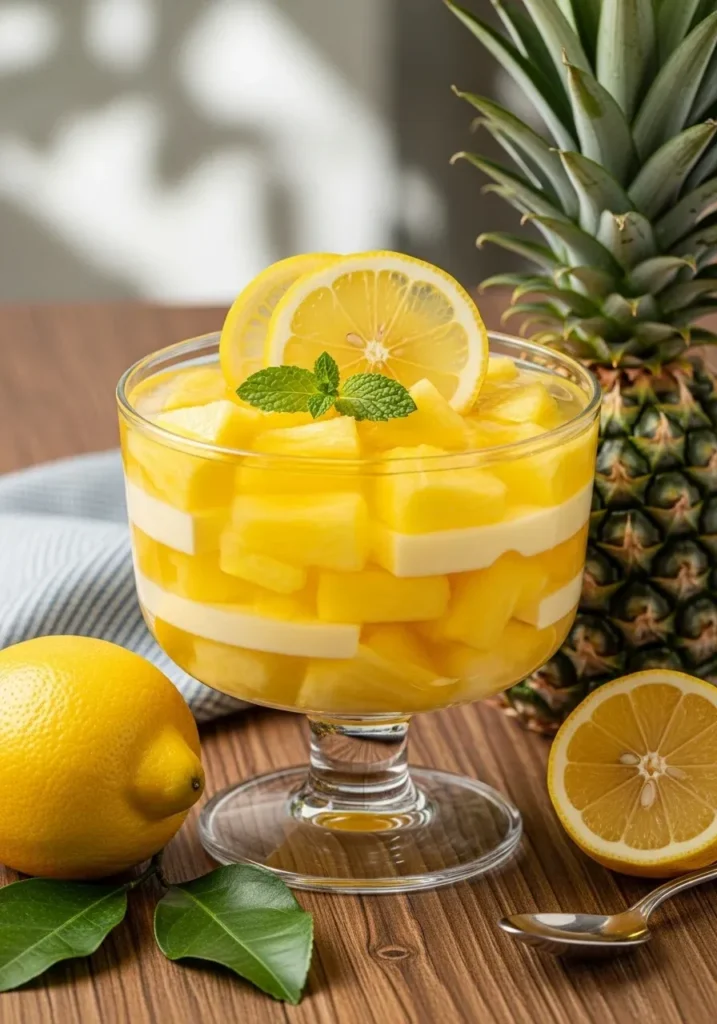
The bright acidity of the Lemon-Pineapple Gelatin Dessert makes it a versatile companion for various side dishes and toppings. I love serving it alongside a fresh mint and cucumber salad for a double dose of refreshment. Furthermore, a dollop of coconut whipped cream or a drizzle of vegan vanilla yogurt adds a creamy contrast that balances the tartness of the lemon.
If you are serving this at a brunch, consider pairing it with roasted seasonal vegetables or a light quinoa salad. The citrus notes act as a palate cleanser, making it the perfect follow-up to savory dishes. For a touch of crunch, sprinkle some toasted macadamia nuts or shredded coconut over the top just before serving. These additions provide a delightful texture play that enhances the overall sensory experience.
Frequently Asked Questions (FAQ)
Can I use other fruits in this gelatin dessert?
Absolutely! While the Lemon-Pineapple Gelatin Dessert is a classic combination, you can easily add berries, mango, or kiwi. However, remember that kiwi and papaya also contain enzymes similar to pineapple, so you must blanch them briefly before adding them to the agar-agar mixture to ensure a proper set.
Is agar-agar healthier than traditional gelatin?
Agar-agar is a fantastic plant-based alternative derived from red algae. It is naturally rich in fiber and contains no calories, carbs, or fat. Furthermore, it is completely odorless and tasteless, allowing the natural flavors of the lemon and pineapple to shine through without any animal-derived additives.
How do I get the dessert out of the mold without it breaking?
To unmold your dessert perfectly, dip the bottom of the mold in warm water for about ten seconds. This slightly melts the outer layer, allowing it to slide out easily. Afterward, gently run a thin spatula around the edges and invert it onto a flat serving plate. Patience is your best friend during this step!
Lemon-Pineapple Gelatin Dessert is a vibrant dish that combines the tartness of lemons with the sweetness of pineapples, making it a refreshing choice for dessert lovers. This delightful treat can also be a part of a healthy diet, especially when made with natural ingredients like agar-agar, a vegetarian gelatin substitute. For more on the health benefits of this dish, see more about gelatin substitutions.
Final Thoughts
Bringing this Lemon-Pineapple Gelatin Dessert to your table is a joyful way to celebrate vibrant flavors and sustainable living. I hope you enjoy every zesty, jiggly bite of this sunshine-filled treat. Happy cooking, and remember to keep your kitchen creative and eco-friendly!
Nutrition Information (per serving)
This nutritional breakdown provides an estimate for one serving of Lemon-Pineapple Gelatin Dessert, assuming the recipe is divided into six equal portions.
| Nutrient | Amount |
|---|---|
| Calories | 65 kcal |
| Carbohydrates | 16 g |
| Fiber | 2 g |
| Sugar | 12 g |
| Protein | 0.5 g |
| Vitamin C | 35% DV |
Lemon-Pineapple Gelatin Dessert
Refreshing and vibrant, this Lemon-Pineapple Gelatin Dessert brings a burst of sunshine to your table. The zesty citrus notes perfectly complement the sweet tropical pineapple chunks. This plant-based version uses agar-agar for a clean, sustainable finish, resulting in a smooth texture and naturally bright yellow hue.
Ingredients
Method
- Prepare the Fruit: Start by dicing your pineapple into small, uniform bite-sized pieces. If using fresh pineapple, simmer the chunks in a small amount of water for five minutes. Drain and set aside.
- Zest and Juice: Wash your organic lemons. Zest them until you have a tablespoon of peel, then squeeze to extract half a cup of juice.
- Mix the Base: In a heavy-bottomed saucepan, combine the water, agar-agar powder, and turmeric. Whisk while still cold to prevent clumping, then turn the heat to medium-high.
- Activate the Agar: Bring to a rolling boil, whisking constantly for 2-3 minutes until agar fully dissolves and activates.
- Sweeten and Flavor: Reduce heat to low, stir in the maple syrup, lemon juice, and zest. Adjust sweetness if necessary.
- Assemble: Arrange pineapple chunks at the bottom of the mold or ramekins and pour the hot liquid over it.
- Chill and Set: Let sit at room temperature for 20 minutes, then refrigerate for at least 3-4 hours or overnight.
Notes
Choose organic ingredients for the best flavor. Agar-agar must reach boiling to activate properly. Store in an airtight container in the fridge for up to 5 days.