The Best Fluffy Pancakes recipe you will fall in love with. Full of tips and tricks to help you make the best pancakes.

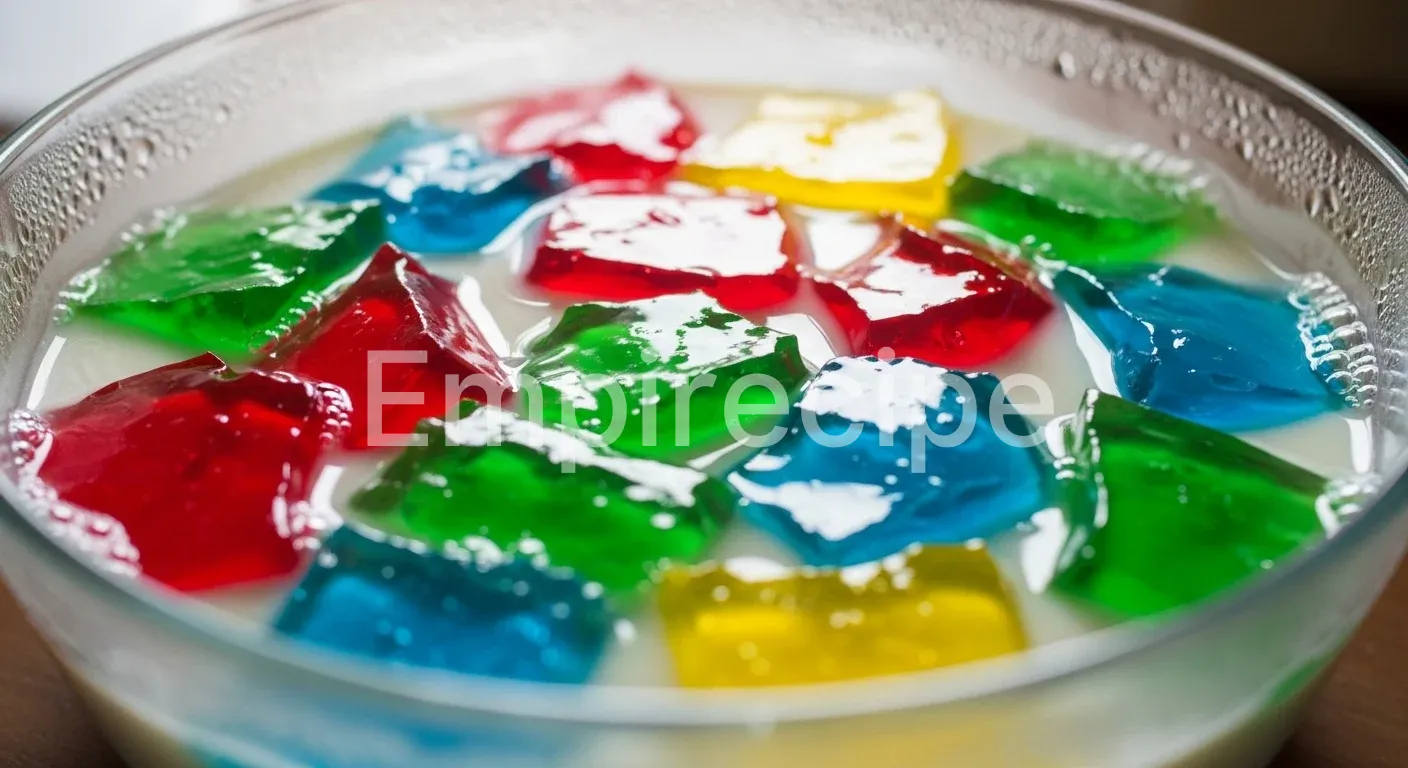
Vibrant colors make this Broken Glass Jello a masterpiece. It offers a firm texture that melts gently in your mouth. This recipe transforms simple ingredients into a dazzling stained-glass effect.
You will love how light catches every colorful cube. This Broken Glass Jello brings joy.
Table of Contents
Why You’ll Love This Recipe
- Visual spectacle: A stunning stained-glass aesthetic for any table.
- Plant-powered: Uses healthy agar-agar instead of animal gelatin.
- Customizable: Endless color combinations from natural juices.
- Anti-waste: Perfectly repurposes leftover fruit liquids.
Ingredients You’ll Need
- Agar-Agar Powder: A high-quality, plant-based gelling agent derived from seaweed.
- Fruit Juices: Three to four different colors (pomegranate for red, mango for yellow, spinach-apple for green, and blue spirulina for blue).
- Full-Fat Coconut Milk: Provides the creamy, opaque white base that makes the colors pop.
- Maple Syrup: A natural sweetener to balance the tartness of the juices.
- Vanilla Bean Paste: Adds a sophisticated aroma and tiny black specks for visual depth.
- Filtered Water: Essential for achieving perfect clarity in the colored cubes.
- Pinch of Sea Salt: Enhances the natural sweetness of the coconut and fruit.
Substitutions & Variations
Note: This video is for demonstration purposes and may use a slightly different method.
To keep your Broken Glass Jello healthy and eco-responsible, swap refined sugars for agave nectar or monk fruit sweetener. If you cannot find agar-agar, you may use carrageenan, though the texture will be slightly softer. For a floral twist, replace one juice color with hibiscus tea or butterfly pea flower infusion. These natural swaps ensure your Broken Glass Jello remains free from artificial dyes while maintaining a vibrant, neon-like glow.
If you’re looking to make your Broken Glass Jello even healthier, consider replacing refined sugars with natural sweeteners like agave nectar or monk fruit. To elevate your dessert further, check out this recipe for Keto Gelatin as an alternative.
Equipment You’ll Need
- Rectangular Glass Containers: Four small containers for setting individual colors and one large 9×13 inch pan for the final assembly.
- Sharp Chef’s Knife: Necessary for cutting the set gels into clean, precise cubes without tearing.
- Medium Saucepan: For boiling the agar-agar mixture to ensure full activation of the gelling properties.
- Whisk: To incorporate the coconut milk and sweetener into a smooth, lump-free base.
- Measuring Cups and Spoons: Precision is vital when working with agar-agar ratios.
- Offset Spatula: Helps in gently lifting the cubes and smoothing the top of the final dessert.
Step-by-Step Instructions
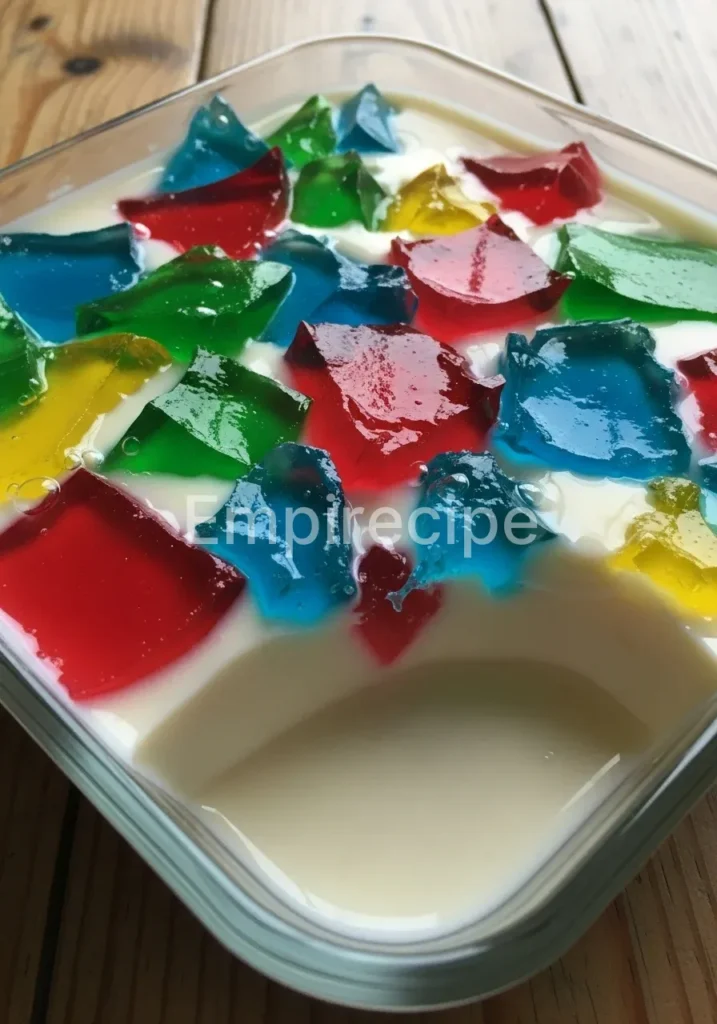
- Prepare the Colored Jewels: In separate small saucepans, combine one cup of each fruit juice with one teaspoon of agar-agar powder. Bring each mixture to a boil while stirring constantly. Simmer for two minutes to activate the agar. Pour each color into a small glass container and refrigerate for at least one hour until firm.
- Slice the Rainbow: Once the colored gels are completely set, use a sharp knife to cut them into small, irregular cubes (about half an inch wide). These will become the “shards” in your Broken Glass Jello. Mix the colors gently in a large bowl to distribute them evenly.
- Prepare the Creamy Base: In a medium saucepan, whisk together two cups of coconut milk, half a cup of water, one tablespoon of agar-agar, and your sweetener. Bring the mixture to a gentle boil, then simmer for three minutes. Remove from heat and stir in the vanilla bean paste.
- The Cooling Phase: Allow the creamy coconut mixture to cool on the counter for about 10 to 15 minutes. It must be warm enough to remain liquid but cool enough so that it does not melt the colored cubes upon contact. This is the most critical step for a successful Broken Glass Jello.
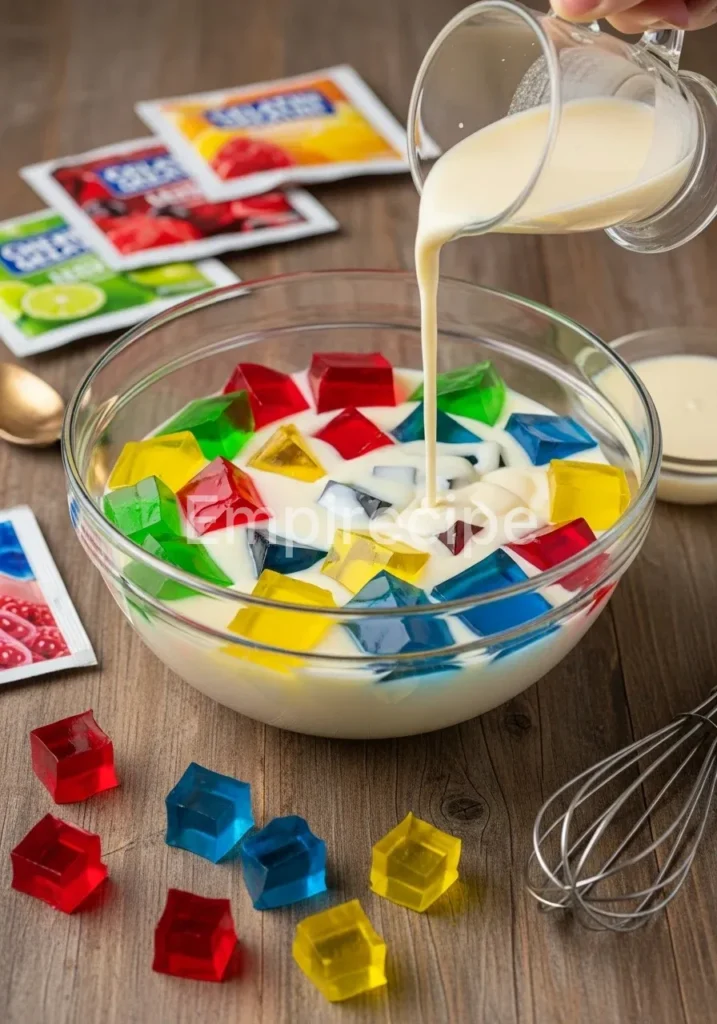
- Assembly: Scatter the colorful cubes into your large 9×13 inch pan. Carefully pour the cooled coconut mixture over the cubes. Use a spoon to gently nudge the cubes so they are evenly submerged and the white liquid fills every gap.
- Final Setting: Place the pan in the refrigerator. Let the Broken Glass Jello set for at least four hours, or ideally overnight, to ensure the layers bond perfectly.
- Serving: Slice the dessert into squares or diamonds. Use an offset spatula to lift them out, revealing the beautiful mosaic pattern inside.
Creating the vibrant colored layers in your Broken Glass Jello is crucial for that stunning look. To expand your dessert repertoire, try out this delightful Colorful Gelatin Cheesecake that features a similar aesthetic.
Pro Tips
Building a perfect Broken Glass Jello requires attention to the science of plant-based gelling agents. Agar-agar sets much firmer than traditional gelatin and stays stable at room temperature, which is a massive advantage for summer parties. However, agar requires boiling to activate; simply mixing it with hot water will not suffice.
To achieve a crystal-clear appearance in your colored shards, strain the juice through a fine-mesh sieve to remove any pulp before boiling. If bubbles form on the surface of your creamy base, lightly spray them with a mist of food-grade alcohol or quickly pass a kitchen torch over the surface to pop them before the gel sets. This ensures your Broken Glass Jello looks professional and polished.
Additionally, ensure the colored cubes are cold when you pour the white base. The temperature differential helps the cubes maintain their sharp edges, creating that iconic “shattered” look that defines Broken Glass Jello.
Storage & Reheating Tips
The Broken Glass Jello should always be stored in the refrigerator in an airtight container. Because this version uses coconut milk and natural juices, it stays fresh for about four to five days. Do not freeze this dessert, as freezing alters the cellular structure of the agar-agar, leading to a watery and spongy texture upon thawing.
When serving, keep the Broken Glass Jello chilled until the very last moment to maintain its refreshing mouthfeel. If you are transporting it to a picnic, use a cooler bag with ice packs. Unlike gelatin, agar-agar will not melt into a puddle at room temperature, making it the most reliable choice for outdoor events.
Proper storage of your Broken Glass Jello ensures it remains fresh and delicious. To explore another unique way to preserve flavors while enjoying a healthy meal, check out this recipe for Zucchini Ribbon Lasagna Soup.
What to Serve With This Recipe
Since this Broken Glass Jello is light and refreshing, it pairs beautifully with vibrant, nutrient-dense sides. Serve it alongside a crisp arugula and fennel salad with a citrus vinaigrette to contrast the creamy coconut base. For a more substantial pairing, consider roasted root vegetables glazed with balsamic vinegar; the earthy tones of the vegetables complement the fruity sweetness of the dessert.
You can also serve it with a side of toasted coconut flakes or a dollop of whipped cashew cream for extra decadence. This Broken Glass Jello acts as a palate cleanser, making it an excellent follow-up to spicy plant-based dishes like Thai red curry or a zesty quinoa salad.
Frequently Asked Questions (FAQ)
Can I make Broken Glass Jello with store-bought Jello packs?
While you can use pre-packaged mixes, they often contain artificial dyes and high amounts of refined sugar. For a healthier, eco-responsible version, using natural fruit juices and agar-agar powder provides superior flavor and better nutrition. The plant-based method also ensures your dessert is vegan-friendly.
Why did my Broken Glass Jello layers separate?
Layer separation usually happens if the colored cubes are too dry or if the creamy base has cooled down too much before pouring. To prevent this, ensure the cubes are slightly moist and the coconut base is still lukewarm. This allows a slight surface melt that helps the two layers bond into a single, cohesive unit.
Is agar-agar healthier than traditional gelatin?
Yes, agar-agar is a fantastic alternative. It is high in fiber, contains no calories or carbs, and is completely plant-derived. It also sets faster and is more stable at room temperature, making it a functional and healthy choice for creating the perfect Broken Glass Jello texture.
Broken Glass Jello is a playful dessert that attracts attention with its vibrant, cube-like presentation. This delightful treat, often made with agar-agar as a vegan gelatin substitute, showcases creativity in flavor and appearance, making it a favorite for parties and gatherings, which you can learn more about in this article on dessert.
Final Thoughts
Creating this Broken Glass Jello allows you to play with light and color in your kitchen. It represents the beauty of plant-based art that satisfies both the eyes and the soul. Share this shimmering Broken Glass Jello with friends to celebrate the vibrant energy of healthy, eco-friendly cooking every day.
Nutrition Information (per serving)
| Nutrient | Amount per Serving |
|---|---|
| Calories | 120 kcal |
| Total Fat | 5g |
| Carbohydrates | 18g |
| Fiber | 2g |
| Sugars | 12g |
| Protein | 1g |
Broken Glass Jello
This Broken Glass Jello is a visually stunning dessert that creates a stained-glass effect using vibrant, colorful cubes of fruit juices set in a creamy coconut base.
Ingredients
Method
- In separate small saucepans, combine one cup of each fruit juice with one teaspoon of agar-agar powder. Bring each mixture to a boil while stirring constantly. Simmer for two minutes and refrigerate until firm.
- Once set, cut the gels into small, irregular cubes.
- In a medium saucepan, whisk together two cups of coconut milk, half a cup of water, one tablespoon of agar-agar, and maple syrup. Simmer for three minutes.
- Allow the creamy mixture to cool slightly before pouring over the colorful cubes in a large pan.
- Refrigerate for at least four hours to set completely and then slice to serve.
Notes
Ensure agar-agar is activated by boiling. Strain juices for clarity. Keep the jello chilled until serving.